



Explore the symbolism of fruit in our faith and scripture, and what it can teach us about God.
Les premiers fruits qu’on apporte de la terre promise sont de généreuses grappes de raisin mûr. On retrouve ce fruit lorsque Jésus transforme l’eau des jarres en vin, à Cana, et lorsqu’il lève sa coupe à la dernière cène. Nous servons du vin lors des grandes occasions : mariages, anniversaires et fêtes. Son goût riche rehausse nos moments de bonheur, d’abondance et de joie.
Pendant la messe, le vin est présenté comme une offrande. Le prêtre récite alors cette prière : « Fruit de la vigne et du travail des hommes; nous te le présentons : il deviendra pour nous le vin du Royaume éternel. »
Dieu saisit le fruit de notre travail et le transforme. À l’approche de Noël, quels fruits pouvons-nous lui offrir? Quel travail accompli cette année pourriez-vous confier à Dieu?
Imaginez que vous vous assoyez à côté de la crèche, une grappe de raisin entre les mains. Chaque raisin représente un « fruit de votre travail ». Par exemple, pensez à un achat qui vous a demandé de grands efforts ou à un projet que vous avez bien terminé. Vous pourriez aussi évoquer un talent perfectionné au cours de l’année ou une belle réussite. Chaque raisin pourrait représenter une bénédiction, comme une nouvelle relation, un nouveau membre de la famille ou un nouvel emploi.
Prenez-les un à un et donnez-les à Jésus. Déposez-les dans la paille de la crèche. Demandez-lui ce qu’il souhaite en faire en 2025 et accordez-lui votre permission.
Ensemble, nous confions au Christ les fruits de 2024 dans l’archidiocèse d’Ottawa-Cornwall. Prions pour qu’il transforme l’ordinaire en extraordinaire.
Les oranges sont apparues dans nos bas de Noël au 19e siècle. Cette tradition remonte à saint Nicolas, qui a libéré trois femmes de l’esclavage en garnissant leurs bas avec son or. Plus abordable, l’orange a remplacé l’or, mais ce cadeau demeure un luxe. Durant la Grande Dépression, les familles qui n’ont pas les moyens d’en acheter régulièrement mettent des sous de côté pour glisser une orange dans les bas de Noël de leurs proches. Les oranges étaient un délice. Elles valaient leur pesant d’or.
Nous sommes nombreux à vivre dans une abondance que nous tenons souvent pour acquise. À l’épicerie, les étalages nous offrent une profusion d’agrumes : clémentines, mandarines et tangerines. Devant cette abondance, quels petits cadeaux Dieu glisse-t-il encore secrètement dans nos vies?
Aujourd’hui, pelez lentement une orange. Sentez l’huile parfumée de l’écorce sur vos mains. Chaque quartier est une prière de gratitude envers Dieu, notre pourvoyeur et la véritable source de cette abondance.
L’olive est indissociable de l’histoire du Salut. Après le déluge, le premier signe de la nouvelle création de Dieu est une colombe portant en son bec une feuille d’olivier. L’huile d’olive était utilisée dans l’onction donnée aux rois et aux prêtres, ainsi que pour éclairer les demeures dans l’Antiquité. Le temple, lieu abritant la présence de Dieu, resplendissait sous la lueur de lampes à l’huile d’olive.
L’usage le plus courant de ce fruit consiste à écraser les olives, puis à les presser pour en extraire l’huile aromatique qui imprègne le monde biblique. Est-ce une coïncidence si Jésus se trouve dans une oliveraie le jour où il prend sur ses épaules le poids écrasant du péché de l’humanité? En effet, la traduction directe de Gethsémani est « pressoir à olives ».
La paix exige des sacrifices. La foi nous appelle à confier en celui qui fait tourner le pressoir à olives. Nous devons laisser Dieu nous « presser » un peu, car il sait extraire du plus amer des cœurs un cœur sacré.
Quel enseignement religieux peut-on tirer d’une grenade?
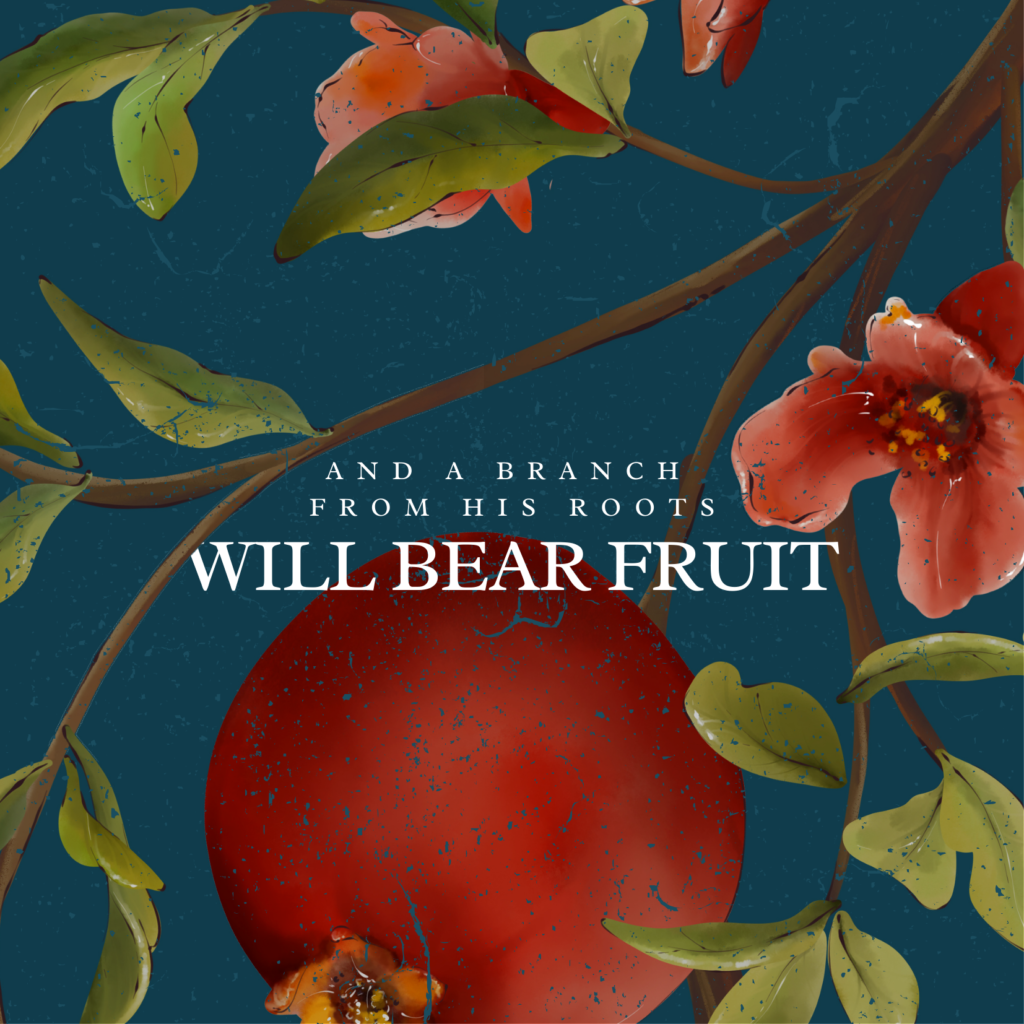
Pour l’avent cette année, l’archidiocèse a choisi le passage suivant : « Un rameau sortira de la souche de Jessé, père de David, un rejeton jaillira de ses racines. » Pendant quatre semaines, nous aborderons la grenade, l’olive, l’orange et le raisin, des fruits riches en enseignements sur Dieu et la foi.
Pour se présenter devant le Seigneur, Aaron revêt un manteau aux pans bordés de grenades de fil pourpre violette, pourpre rouge et cramoisi éclatant. Prescrit par Dieu pour les vêtements sacerdotaux (Exode 28, 33-35), ce même motif de fruit intègre plus tard la structure du temple de Salomon (1 Rois 7, 20).
Pourquoi choisir la grenade? L’Écriture sainte est muette sur la question. Cela dit, la grenade est devenue un symbole de l’Église et de son universalité. Sa forme et sa peau écarlate évoquent un cœur, et son intérieur révèle des lobes remplis de jusqu’à 1 400 graines couleur rubis.
Le Symbole des apôtres professe une foi « à la sainte Église catholique ». Ce dernier mot, tout simple, est néanmoins vital pour comprendre notre foi, car il signifie « universel ».
Notre église réunit des millions de croyants depuis des générations. Nous vivons notre foi dans notre pays et culture, à notre époque. Sauf que l’amour du Christ n’a pas de frontière; il baigne le monde entier. Alors, n’oublions pas : c’est ensemble que nous trouvons refuge dans son Sacré-Cœur.
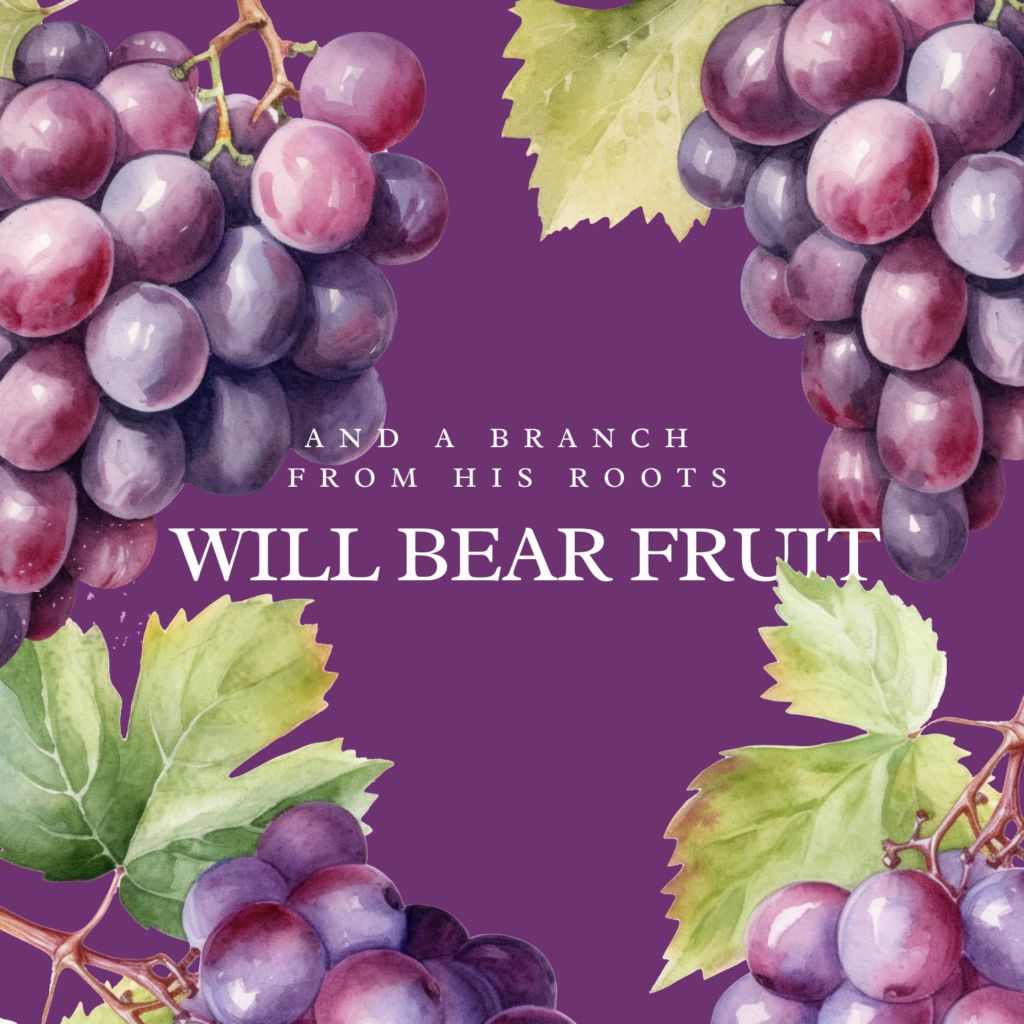
Grapes were the first fruits carried from the Promised Land in heavy, ripe clumps. Their wine filled the jars Jesus multiplied in Cana and the cup he lifted at the Last Supper. We pour wine on our most special occasions—weddings, birthdays, holidays—and its rich taste marks moments of goodness, abundance, and joy.
During the Mass, we present wine as an offering. The priest prays over it, saying, “Fruit of the Vine and work of human hands; It will become our spiritual drink.”
God can take the works of our hands, our “grapes”, and transform them. As we approach Christmas, what are the “grapes” you can offer him? What have you made this year that you can entrust to his hands?
Picture yourself sitting beside the creche holding a cluster of grapes. Each grape represents a “work of your hands”. It could be a physical item that you pushed hard to buy, or a successful project completed. It could be a talent you’ve developed this past year, or an accomplishment. It could even be a blessing, like a new relationship, a new family member, or a new job.
One by one, hand them to Jesus. Tuck them into the straw of the manger. Ask him how he wants to use them in 2025 and give him permission.
Together, we entrust to Christ the fruits of 2024 in the Archdiocese of Ottawa-Cornwall. May he turn our ordinary into something extraordinary.
Beginning in the 19th century, oranges have been tucked into the toes of Christmas stockings. The tradition comes from St. Nicholas who saved three women from slavery by putting bags of his own gold into their stockings. Oranges replaced gold as a cheaper gift, but they were still a luxury. During the Great Depression, families who couldn’t regularly afford the fruit counted out coins to put a single orange into the stockings of loved ones. Oranges were a delight. They came at a price.
Many of us are blessed with an abundance we take for granted. Push a shopping cart between grocery aisles and you’ll find heaping piles of clementines, mandarins, and tangerines. But in the midst of such plenty, what small gifts has God tucked into our lives?
Peel an orange slowly today. Smell the oil of the rind on your hands. Each wedge is a prayer of gratitude to the God who provides, and from whom all gifts truly come.
The olive is embedded in Salvation History. The first sign of God’s new creation after the flood was an olive leaf in the beak of a dove. Olive oil was poured over the heads of kings and priests to anoint them and was used to light the homes of ancient peoples. The temple, where God’s presence dwelled, was lit by the warm glow of olive oil lamps.
Olives are fruits meant to be crushed. An olive must be ground down and pressed in order to become the fragrant oil that permeated biblical life. Is it a coincidence that when Jesus took on the crushing weight of humanity’s sin, he did so in an olive garden? In fact, the name Gethsemane means “oil press.”
Peace requires sacrifice. Faith calls for us to trust in the one turning the olive press. When we let God “crush” us a little, he can turn even the bitterest parts of our heart into something sacred.
What can a pomegranate teach us about God?
Our diocesan scripture for Advent 2024 is “A shoot will spring from the stump of Jesse, and a branch from his roots will bear fruit.” Over four weeks, we’ll be exploring what fruit—pomegranate, olive, orange, and grape — can teach us about God and faith.
Pomegranates twisted from blue, purple, and scarlet yarn hung from the hem of Aaron’s robe as he stepped into the presence of God. They were part of God’s instructions for priestly vestments (Exodus 28:33–35), and their shape was later integrated into the physical design of Solomon’s temple (1 Kings 7:20).
Why pomegranates? Scripture doesn’t confide God’s reason. But pomegranates have come to symbolize the Church and her universality. The red shell and shape evoke imagery of a heart, and when cracked, the inside reveals up to 1400 ruby seeds clustered in chambers.
The Apostles Creed uses the lowercase version of the word ‘catholic’ when it professes “one holy catholic church”. The word itself is simple and yet crucial to our understanding of faith. It means “universal”.
We are a church of millions and generations. We experience our faith in the context of our country, time, and culture. But Christ’s love is soaked into every corner of our world. We must remember we are together in the shelter of his Sacred Heart.
It is important that your Will include the correct legal name and charitable registration number in your documents. The legal name for the Archdiocese of Ottawa-Cornwall is:
THE ROMAN CATHOLIC EPISCOPAL CORPORATION OF OTTAWA-CORNWALL Charitable Registration # 128967353 RR0001
Your parish office is able provide you with the legal name for your own parish. However, most Archdiocesan parishes and programs can be designated in your Will as:
The Roman Catholic Episcopal Corporation of OTTAWA-CORNWALL, for the benefit of [ Specific Parish, Cemetery, Ministry or Program ] in [ Town / City ].
You may also consider the following clauses in your Will:
For your parish:
“To pay to (Legal Name of Parish) Roman Catholic Parish for its own use absolutely, the sum of (amount) dollars. I declare that the receipt of the person professing to be the Pastor or Parochial Administrator of the parish shall be sufficient discharge to my Trustee who need not see to the application thereof. I further direct that if the (Name of Parish) does not exist at the time of my death, this bequest shall be paid to the Parish’s successor, and if no such successor exists, then to an institution with similar objectives and goals.”
Please email dev@ottawacornwall.ca to make a declaration that you have included the Archdiocese of Ottawa-Cornwall or any for its parishes in your Estate Plans.

Lorem ipsum dolor sit amet, consectetur adipiscing elit. Ut elit tellus, luctus nec ullamcorper mattis, pulvinar dapibus leo.